 Blog Matrix
A real DEST engine, not a WPM counter
Keystroke capture, a 15-minute timer, and a mistake classifier that separates full from half mistakes and converts the result into a pass or fail for the candidate’s category.
✦ In-house project
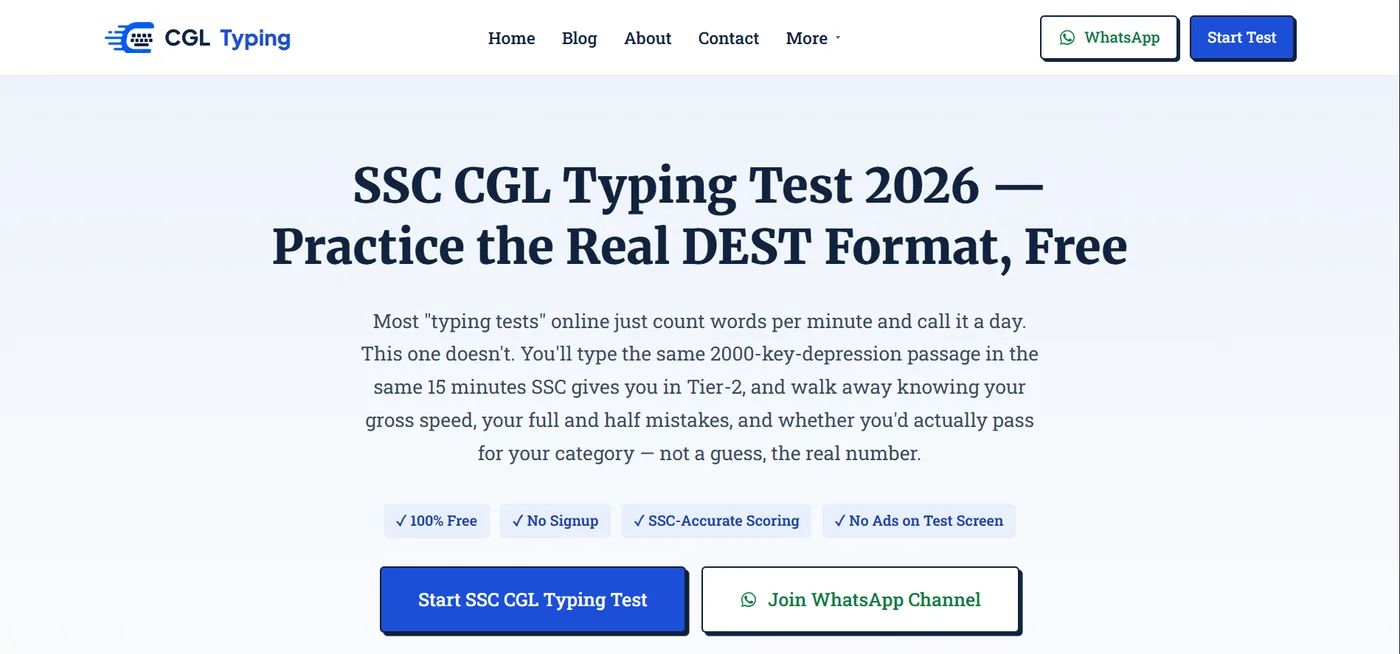
A free SSC CGL typing test that reproduces the real DEST exam format — the same 2,000 key depressions in the same 15 minutes, scored the way SSC scores it.
A new site with no search visibility, in a niche where every competing page measured words per minute instead of the exam format candidates are actually tested on.
Candidates preparing for the SSC CGL Tier-2 typing test had no accurate way to practise. The typing sites that rank for those searches measure words per minute on arbitrary passages, which tells a candidate almost nothing about whether they would pass the actual Data Entry Speed Test.
CGL Typing reproduces the exam instead of approximating it: a 2,000 key-depression passage, a 15-minute timer, and scoring that separates full mistakes from half mistakes the way SSC does — then tells the candidate whether that result would pass for their category. No signup, and no ads on the test screen, because an ad that shifts the layout mid-test invalidates the attempt.
It is built as hand-written HTML, CSS and vanilla JavaScript with no framework and no CMS. The typing engine, the timer, the mistake classifier and the scoring all run client-side, so the test works instantly and keeps working on a weak connection — which matters when the audience is sitting in a cyber cafe on shared mobile data.
Keystroke capture, a 15-minute timer, and a mistake classifier that separates full from half mistakes and converts the result into a pass or fail for the candidate’s category.
No framework, no build step and no backend for the test itself, so the page is small, starts instantly and survives a poor connection.
No ads and nothing that loads late on the test screen. A layout shift mid-attempt ruins the run, so the test page is deliberately the quietest page on the site.
One page per search intent, a supporting blog, and technical SEO handled at build time rather than bolted on — which is what took it to an average position of 8.4.
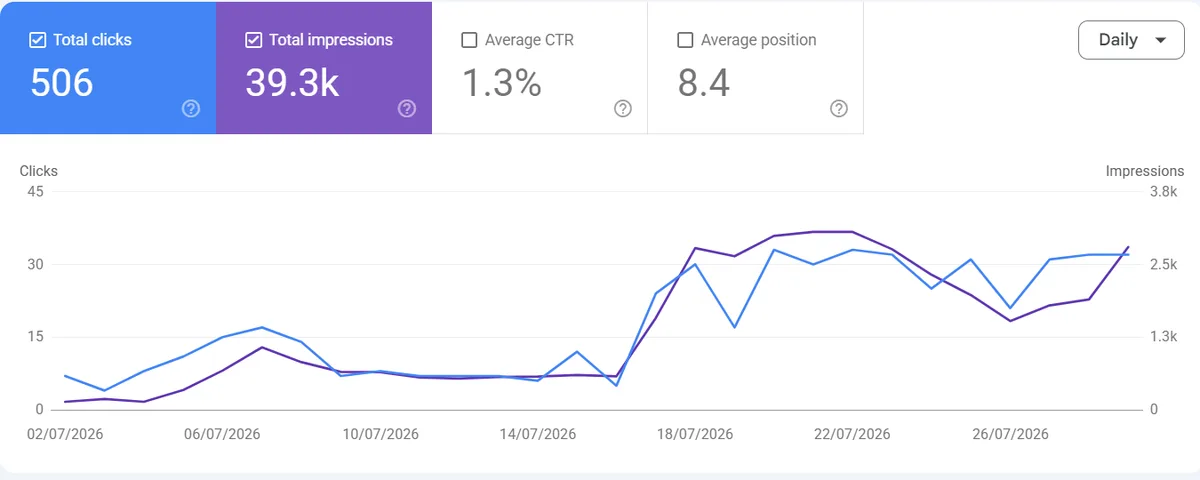
Results vary with competition, the condition of the existing site, the market and how long the work runs. Figures were read on 29 July 2026.